The ABCs of Digital Marketing: Understanding the Basics and Beyond
The digital realm has undeniably reshaped how businesses connect with their audiences, evolving from a supplementary channel to the very core of modern commercial strategy. Understanding this intricate landscape, often referred to as digital marketing, is no longer a luxury but a fundamental requirement for success in today’s interconnected world. It encompasses a vast array of online tactics and technologies designed to promote products, services, and brands, ultimately driving engagement, conversions, and growth. Embarking on this journey requires a solid grasp of its foundational principles, an awareness of its historical trajectory, and an eye toward its ever-shifting future.
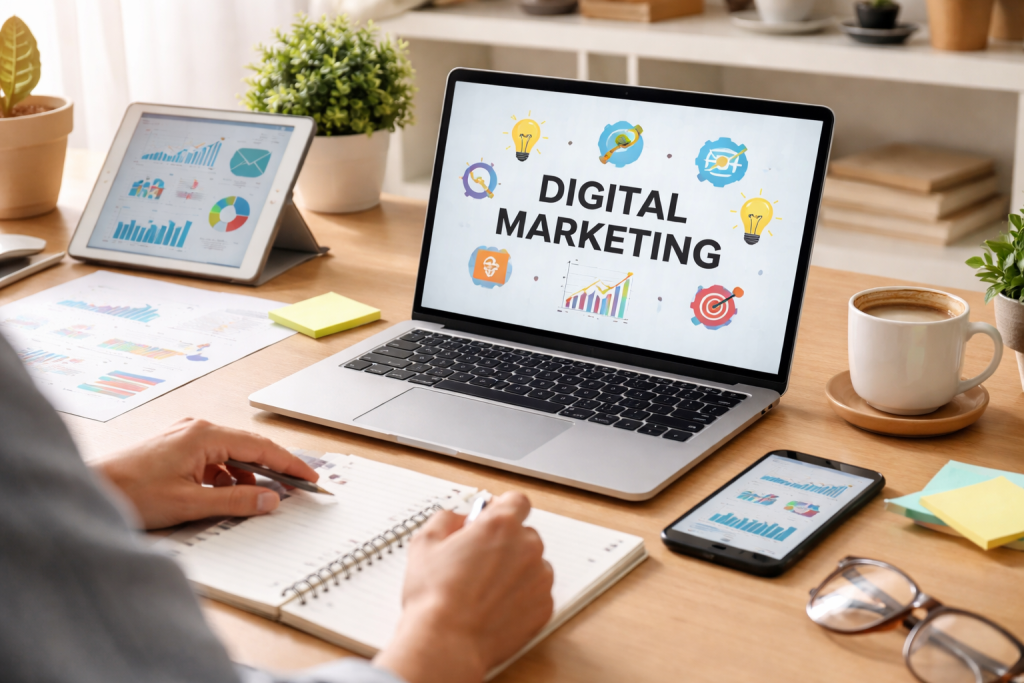
“Digital marketing” is a broad umbrella term that encompasses all marketing efforts that use electronic devices or the internet. Businesses leverage digital channels such as search engines, social media, email, and other websites to connect with current and prospective customers. Unlike traditional marketing, which often relies on print, television, and radio, digital marketing offers unprecedented levels of measurability, targeting, and cost-effectiveness. This shift allows businesses to tailor messages with remarkable precision and track the impact of their campaigns in real time.
Contents
- 1 Defining Digital Marketing in the Modern Era
- 2 Why Digital Marketing is Essential Today
- 3 Search Engine Optimization (SEO)
- 4 Content Marketing
- 5 Social Media Marketing (SMM)
- 6 Email Marketing
- 7 Paid Advertising (PPC)
- 8 Early Days: Banner Ads and Basic Websites
- 9 The Rise of Search and Social
- 10 Data-Driven and Personalized Marketing
- 11 Website Design and User Experience (UX)
- 12 Analytics and Data Interpretation
- 13 Marketing Automation
- 14 Artificial Intelligence (AI) and Machine Learning (ML)
- 15 Influencer Marketing
- 16 Video Marketing
- 17 Voice Search Optimization
- 18 Key Performance Indicators (KPIs)
- 19 Understanding Data Attribution
- 20 Reporting and Optimization
- 21 Hyper-Personalization and Predictive Analytics
- 22 Immersive Experiences: AR and VR
- 23 The Metaverse and Web3
- 24 Ethical AI and Data Privacy
Defining Digital Marketing in the Modern Era
At its core, digital marketing is about connecting with your audience where they spend their time: online. It’s about being present and providing value across various digital touchpoints. This means understanding customer behaviour in the digital sphere, from their search queries to their social media interactions, and then strategically deploying content and advertisements to meet them at every stage of their buyer’s journey. The modern definition extends beyond mere promotion; it’s about building relationships, fostering communities, and delivering seamless customer experiences through digital means.
Why Digital Marketing is Essential Today
In an increasingly digital-first world, ignoring online marketing is akin to ignoring a significant portion of your potential customer base. Consumers today conduct extensive research online before making purchasing decisions, seek recommendations on social media, and expect personalised experiences. Digital marketing allows businesses to meet these evolving consumer expectations head-on. It empowers even small businesses to compete on a global scale, reaching niche audiences that would have been impossible to access through traditional channels alone. The ability to iterate quickly, test different approaches, and optimise campaigns based on data is a significant advantage that digital marketing provides.
To truly grasp digital marketing, one must understand its various synergistic components. These elements work in concert to create a cohesive and effective strategy, each playing a crucial role in reaching and engaging the target audience.
Search Engine Optimization (SEO)
SEO is the practice of increasing the quantity and quality of traffic to your website through organic search engine results. This involves optimising your website’s content, structure, and technical aspects to rank higher in search engines, like Google and Bing. The goal is to appear prominently when users search for terms related to your products or services, driving free, qualified traffic to your site. This foundational element is about making your digital presence discoverable.
Content Marketing
Content marketing focuses on creating and distributing valuable, relevant, and consistent content to attract and retain a clearly defined audience—and ultimately, to drive profitable customer action. This can take many forms, including blog posts, articles, videos, infographics, podcasts, and e-books. The essence of content marketing is to provide value to your audience, establish your brand as an authority, and build trust rather than directly sell.
Social Media Marketing (SMM)
SMM involves using social media platforms to connect with your audience to build your brand, increase sales, and drive website traffic. This encompasses creating and sharing engaging content, running social media advertising campaigns, and actively interacting with followers. Each platform, be it Facebook, Instagram, LinkedIn, or TikTok, offers unique opportunities and requires tailored strategies to effectively engage its user base.
Email Marketing
Email marketing remains one of the most effective digital channels for nurturing leads and retaining customers. It involves sending targeted emails to a list of subscribers to promote products, share updates, or provide valuable information. Building an email list and developing sophisticated email campaigns with segmentation and personalisation can yield significant returns on investment.
Paid Advertising (PPC)
Advertisers utilise the Pay-Per-Click (PPC) model of internet marketing, where they pay a fee for each click on their ads. Essentially, it’s a way of buying visitors to your site, rather than attempting to “earn” those visits organically. Google Ads (formerly Google AdWords) and social media advertising platforms are common examples of PPThis allows for immediate visibility and highly targeted campaigns based on demographics, interests, and search intent.
The journey of digital marketing has been one of continuous innovation and adaptation. What began as rudimentary online advertising has blossomed into a sophisticated ecosystem, driven by data, personalisation, and artificial intelligence.
Early Days: Banner Ads and Basic Websites
The internet’s commercialisation in the mid-1990s gave birth to early forms of digital marketing, primarily through static banner advertisements on new websites. Often untargeted, these early efforts prioritised sheer visibility. Websites were basic, serving primarily as online brochures rather than interactive marketing hubs. The ability to track performance was limited, and strategies were largely experimental.
The Rise of Search and Social
The early 2000s reached an important turning point with the emergence of search engines like Google and the subsequent development of SEO. Businesses began to understand the power of appearing at the top of search results. Soon after, social media platforms like MySpace and Facebook revolutionised online communication, creating new avenues for brands to engage directly with consumers, albeit in rudimentary ways at first. This era saw the first glimmerings of personal advertising and the concept of online communities.
Data-Driven and Personalized Marketing
The last decade has witnessed an explosion in data analytics capabilities, fundamentally transforming digital marketing. Marketers can now collect, analyse, and leverage vast amounts of information about consumer behaviours, preferences, and demographics. Hyper-targeted campaigns, personalised content delivery, and dynamic advertising are fuelled by this data, which shifts the focus from a universal approach to highly individualised experiences. Marketing automation and customer relationship management (CRM) systems have become vital instruments for managing these complex interactions.
Successfully executing a digital marketing strategy relies on a robust toolkit and a deep understanding of various techniques that optimise performance at each stage.
Website Design and User Experience (UX)
Your website is often the central hub of your digital marketing efforts. A well-designed website that offers an intuitive and seamless user experience (UX) is crucial for converting visitors into customers. This involves ensuring fast loading times, mobile responsiveness, clear navigation, and compelling calls to action. A poor UX can quickly drive potential customers away, regardless of how effective your other marketing efforts are.
Analytics and Data Interpretation
Digital marketing’s greatest strength lies in its measurability. Tools like Google Analytics provide invaluable insights into website traffic, user behaviours, conversion rates, and the performance of various marketing channels. The ability to collect, interpret, and act upon this data is paramount for continuous optimisation and proving a return on investment (ROI). Data-driven decisions allow marketers to refine their strategies, reallocate resources, and improve campaign effectiveness.
Marketing Automation
Marketing automation refers to software platforms and technologies designed to automate repetitive marketing tasks. This includes email marketing, social media postings, lead nurturing, and even personalised content delivery. By automating these processes, businesses can improve efficiency, save time, and deliver more consistent, personalised experiences to their audiences, allowing marketing teams to focus on strategy and creativity.
As the digital landscape matures, marketers are continually exploring more sophisticated approaches and leveraging emerging technologies to gain a competitive edge.
Artificial Intelligence (AI) and Machine Learning (ML)
AI and ML are revolutionising digital marketing in profound ways. From powering sophisticated chatbots for customer service to predicting consumer behaviour, personalising content recommendations, and optimising ad bids, AI is enhancing efficiency and effectiveness across the board. These technologies allow for deeper insights and more intelligent automation, resulting in unprecedented levels of personalisation and targeting.
Influencer Marketing
Influencer marketing leverages individuals with a dedicated social media following to promote products and services. These influencers, often considered trustworthy figures by their audiences, can significantly impact purchasing decisions. Crafting authentic partnerships with relevant influencers allows brands to tap into new markets and build credibility through trusted voices.
Video Marketing
Video content continues to dominate online consumption. From short-form videos on TikTok and Instagram Reels to longer-form content on YouTube, video is an incredibly engaging medium for storytelling, product demonstrations, and brand building. Investing in high-quality video production and distribution strategies is becoming increasingly vital for captivating audiences.
Voice Search Optimization
With the proliferation of smart speakers and voice assistants, optimising voice search is a growing imperative. This involves understanding how people phrase questions when speaking versus typing and tailoring content to answer those questions concisely and directly. The future of search includes more natural language queries, and appearing in relevant voice search results will be a key differentiator.
The adage “what gets measured gets managed” holds particularly true in digital marketing. Understanding what’s working, what’s not, and where to make improvements is impossible without proper measurement and analysis.
Key Performance Indicators (KPIs)
KPIs are specific, measurable metrics that indicate the performance of a digital marketing strategy against its objectives. These vary depending on the specific goal, but common KPIs include website traffic, conversion rates (e.g., sales, lead submissions), click-through rates (CTR), cost per acquisition (CPA), email open rates, social media engagement rates, and ROI. Defining clear KPIs at the outset of any campaign is essential for tracking progress and evaluating success.
Understanding Data Attribution
Attribution modelling helps marketers understand which touchpoints in the customer’s journey receive credit for a conversion. In a multi-channel digital world, a customer might interact with an ad, then visit a blog post, then receive an email, and finally convert. Different attribution models (e.g., first-click, last-click, linear, and time decay) assign credit differently, providing varying perspectives on the effectiveness of each channel. Understanding attribution is crucial for optimising media spend and resource allocation.
Reporting and Optimization
Regular reporting on marketing performance is vital for making informed decisions. This involves analysing data against established KPIs, identifying trends, uncovering areas for improvement, and communicating the results to stakeholders. The insights gained from reporting are then fed back into the strategy, leading to continuous optimisation and enhanced campaign effectiveness. Digital marketing is an iterative process; constant testing, learning, and adapting are the hallmarks of successful campaigns.
The digital marketing landscape is constantly in flux, driven by technological advancements and evolving consumer behaviours. Looking ahead, several key trends and emerging technologies will shape its future.
Hyper-Personalization and Predictive Analytics
The ability to deliver highly personalised experiences will continue to evolve, moving beyond basic segmentation to individual-level customisation. Predictive analytics, powered by AI and machine learning, will play a crucial role in anticipating customer needs and preferences, allowing brands to proactively deliver relevant content and offers even before the customer expresses a clear intent.
Immersive Experiences: AR and VR
Augmented Reality (AR) and Virtual Reality (VR) are set to create new frontiers for brand engagement. Imagine virtual showrooms where customers can virtually try on clothes or use AR apps that allow them to visualise furniture in their homes before purchasing. These immersive technologies offer unparalleled opportunities for interactive product showcases and memorable brand experiences.
The Metaverse and Web3
The concept of the metaverse, a persistent, interconnected virtual world, offers a potentially vast new ecosystem for digital marketing. Within Web3, the decentralised internet, brands may engage with consumers in entirely new ways—using NFTs for loyalty programs, creating virtual experiences, and establishing presences in virtual economies. While still in its nascent stages, understanding these emerging paradigms is crucial for future-proofing marketing strategies.
Ethical AI and Data Privacy
As AI becomes more pervasive, the ethical implications and the paramount importance of data privacy will continue to gain prominence. Marketers will need to navigate increasingly stringent regulations and consumer expectations regarding data collection and usage, by emphasising transparency and building trust through ethical practices. The future of digital marketing is not just about leveraging technology but doing so responsibly and ethically.

Our mission is to assist students, beginners, and professionals in learning more effectively, developing practical skills, and enhancing their confidence in today’s digital world.