Level Up Your Knowledge with These 5 Free Online Learning Websites
The modern world is characterized by rapid change, and the ability to adapt and acquire new skills is no longer a luxury but a necessity. Fortunately, the digital age has democratized education, making knowledge more accessible than ever before. Free online learning platforms have emerged as powerful tools for individuals seeking to enhance their careers, explore new passions, or simply satisfy their intellectual curiosity. This article will guide you through the landscape of free online learning, highlighting its advantages and providing a roadmap for embarking on your educational journey.
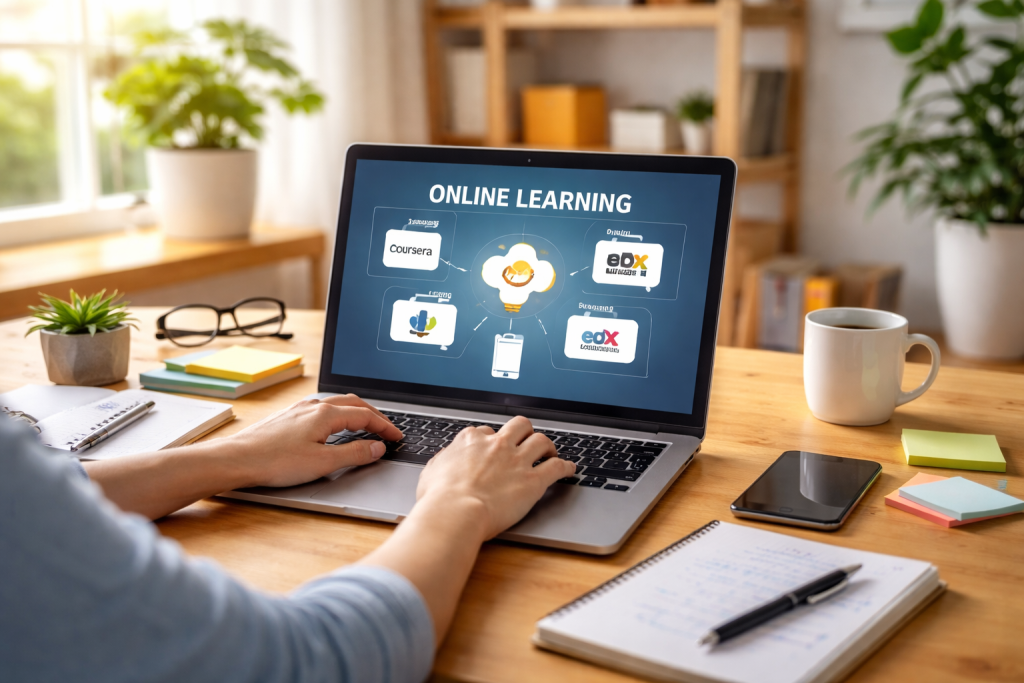
The concept of online learning, also known as e-learning or distance education, has revolutionized how we acquire knowledge. Traditional classrooms, with their fixed schedules and geographical constraints, are no longer the sole avenue for educational pursuits. Online learning dissolves these barriers, offering a flexible and dynamic alternative that caters to diverse learning styles and commitments. The internet has transformed from a source of information into an interactive learning environment, brimming with opportunities for personal and professional growth. This shift is particularly significant for those who might find traditional education prohibitive due to cost, time, or personal circumstances. The availability of free resources has further amplified this accessibility, empowering individuals to take control of their learning destiny. The digital revolution has given us the gift of knowledge at our fingertips, and free online learning platforms are at the forefront of this educational renaissance.
Contents
- 1 Understanding the Fundamentals of Online Education
- 2 The Evolving Landscape of Educational Technology
- 3 Coursera: A Gateway to University-Level Education
- 4 edX: Democratizing Knowledge from Elite Universities
- 5 Khan Academy: Foundational Learning for All Ages
- 6 MIT OpenCourseWare: Unlocking MIT’s Intellectual Arsenal
- 7 YouTube: An Ocean of Educational Content
- 8 Flexibility and Convenience: Learning on Your Terms
- 9 Affordability: High-Quality Education Without the Hefty Price Tag
- 10 Diverse Learning Opportunities: A Universe of Subjects at Your Fingertips
- 11 Self-Paced Learning and Personalized Progress
- 12 Defining Your Learning Goals
- 13 Choosing the Right Platform for Your Needs
- 14 Enrolling and Setting Up Your Learning Environment
- 15 Active Participation and Engagement
- 16 Consistent Study Habits and Time Management
- 17 Seeking Support and Connecting with Others
- 18 Review and Application of Knowledge
Understanding the Fundamentals of Online Education
At its core, online learning involves accessing educational content and engaging with instructors and peers through the internet. This can range from pre-recorded video lectures and interactive quizzes to live webinars and collaborative online projects. The beauty of this modality lies in its adaptability. Learners can study at their own pace, revisit complex topics, and tailor their learning schedules around their existing responsibilities. This self-directed approach fosters a sense of autonomy and encourages proactive engagement with the material. The diverse formats employed by online platforms ensure that learning can be both engaging and effective, catering to different preferences and learning styles.
The Evolving Landscape of Educational Technology
The technology underpinning online learning is constantly evolving, leading to more sophisticated and immersive learning experiences. From artificial intelligence-powered personalized learning paths to virtual reality simulations that offer hands-on practice, the tools available to online learners are becoming increasingly advanced. This technological innovation means that online education is not just a convenient alternative; it is rapidly becoming a powerful and multifaceted educational resource in its own right. The integration of cutting-edge technology ensures that online learning remains relevant and effective in preparing individuals for the demands of the 21st century.
The sheer volume of free online learning resources can be overwhelming. To help you navigate this wealth of information, we have curated a list of five exceptional platforms that offer high-quality educational content across a vast array of disciplines, all without costing you a dime. These platforms are renowned for their comprehensive course offerings, expert instructors, and user-friendly interfaces, making them ideal starting points for anyone looking to expand their knowledge base.
Coursera: A Gateway to University-Level Education
Coursera stands as a titan in the realm of online learning, partnering with some of the world’s most prestigious universities and institutions. While many courses offer paid certificates, a significant portion of the course content, including lectures, readings, and assignments, can be accessed for free through their “audit” option. This allows learners to gain in-depth knowledge without financial commitment. The platform boasts an impressive catalog spanning everything from computer science and business to humanities and personal development.
Exploring Coursera’s Free Offerings
Coursera’s audit feature is a game-changer for accessible education. It provides an authentic university experience, allowing you to learn from leading academics and explore subjects at a rigorous level. By auditing a course, you can watch all the video lectures, read the assigned materials, and complete many of the assignments. While you won’t receive a formal grade or certificate, the knowledge and skills you acquire are invaluable. The platform’s partnerships with renowned institutions lend immense credibility to its educational content.
The breadth of subjects available on Coursera is truly remarkable. Whether you’re interested in mastering Python programming, understanding the intricacies of marketing, delving into the history of art, or even learning a new language, Coursera likely has a course for you. This diversity makes it an excellent resource for both targeted skill development and broad intellectual exploration. The ability to explore different fields without financial risk is a significant advantage.
edX: Democratizing Knowledge from Elite Universities
Similar to Coursera, edX is a non-profit online learning platform founded by Harvard and MIT. It offers a vast selection of courses from top-tier universities globally, with many available for free auditing. edX is committed to making high-quality education accessible to everyone, regardless of their background or financial situation. Their platform focuses on providing a rigorous and engaging learning experience.
Unlocking edX’s Audit Pathway
The audit option on edX functions much like Coursera’s, granting access to course materials for free. This includes video lessons, readings, and graded assignments. It’s a fantastic way to sample university-level courses from institutions like Berkeley, Stanford, and Oxford without any obligation. The commitment to open access education is a cornerstone of edX’s mission, making it a truly valuable resource for learners worldwide.
edX’s Commitment to Social Impact
Beyond its academic rigor, edX is deeply committed to addressing global challenges through education. Many of its courses focus on critical issues such as sustainability, public health, and social justice, aiming to equip learners with the knowledge and tools to effect positive change in their communities and beyond. This focus on impactful learning sets edX apart as an educational platform with a broader societal vision.
Khan Academy: Foundational Learning for All Ages
Khan Academy is a non-profit educational organization with a mission to provide a free, world-class education for anyone, anywhere. While it’s particularly well-known for its comprehensive K-12 curriculum, Khan Academy also offers a robust selection of courses in subjects like computer science, economics, and art history. It’s an excellent resource for strengthening foundational knowledge or getting started with new subjects.
The Breadth of Khan Academy’s Curriculum
Khan Academy’s strength lies in its clarity and accessibility. Their lessons are typically delivered through short, engaging videos, supplemented by practice exercises and quizzes. The platform covers a vast range of subjects, making it an ideal place to reinforce concepts learned in school, prepare for standardized tests, or even begin a new academic journey. The mastery-based learning approach ensures that learners truly understand concepts before moving on.
Khan Academy’s Focus on Mastery
A key feature of Khan Academy is its emphasis on mastery. Learners are encouraged to practice until they can demonstrate a thorough understanding of a topic before progressing. This approach not only builds confidence but also ensures a solid foundation for more advanced learning. The platform’s adaptive technology can identify areas where a learner might be struggling and provide targeted support.
MIT OpenCourseWare: Unlocking MIT’s Intellectual Arsenal
MIT OpenCourseWare (OCW) is an ambitious initiative by the Massachusetts Institute of Technology to publish the educational materials from its undergraduate and graduate courses online, free of charge. This includes lecture notes, assignments, exams, and even video lectures for a large number of courses. While OCW doesn’t offer certificates or direct interaction with instructors, it provides access to MIT’s renowned curriculum.
Delving into MIT’s Pioneering Courses
For those who aspire to engage with the cutting-edge research and teaching of one of the world’s leading technical universities, MIT OCW is an unparalleled resource. You can find courses on artificial intelligence, quantum mechanics, entrepreneurship, and virtually every other discipline MIT offers. The depth and breadth of these materials are extraordinary, offering a glimpse into the academic rigor of a top-tier institution.
The Significance of Open Access to MIT’s Knowledge
The decision by MIT to make its course materials publicly available is a testament to the institution’s commitment to advancing knowledge globally. This open access model allows anyone with an internet connection to learn from some of the brightest minds in academia. It’s a powerful demonstration of how leading institutions can contribute to the democratization of education on a global scale.
YouTube: An Ocean of Educational Content
While often viewed as a platform for entertainment, YouTube has evolved into a treasure trove of educational content. Numerous channels, often run by passionate educators, experts, and institutions, offer free courses, tutorials, documentaries, and lectures on virtually every topic imaginable. The sheer volume and diversity of content make it an incredibly versatile learning tool.
Discovering Specialized YouTube Channels
The key to unlocking YouTube’s educational potential lies in discovering specialized channels. Look for channels dedicated to specific subjects, such as science communication (e.g., Kurzgesagt, Physics Girl), programming tutorials (e.g., The Net Ninja, freeCodeCamp), history deep dives (e.g., Oversimplified, Extra Credits), or language learning. Many universities and organizations also maintain official YouTube channels with valuable lectures and educational series.
Leveraging YouTube for Visual and Interactive Learning
YouTube’s strength lies in its visual and auditory presentation. Video formats are excellent for demonstrating complex processes, explaining abstract concepts, and showcasing visual examples. Many creators also foster community through comment sections, allowing for discussion and peer learning. This interactive element, even if informal, can significantly enhance the learning experience.
The shift towards online learning is not merely a trend; it’s a revolution fueled by a multitude of compelling benefits that resonate with learners of all backgrounds and aspirations. Understanding these advantages can further solidify your decision to embark on this educational path.
Flexibility and Convenience: Learning on Your Terms
Perhaps the most significant advantage of online learning is its unparalleled flexibility. Learners can access course materials and participate in learning activities at any time, from anywhere with an internet connection. This means you can fit your studies around work, family commitments, or other personal responsibilities. The ability to learn at your own pace, rewatch lectures, and take breaks when needed is a significant departure from the rigid structure of traditional education. This autonomy empowers learners to design a study schedule that perfectly aligns with their individual needs and lifestyle.
Affordability: High-Quality Education Without the Hefty Price Tag
The cost of traditional education can be a substantial barrier for many. Free online learning platforms democratize access by offering high-quality courses, lectures, and resources without tuition fees. While paid certificates or advanced degrees might incur costs, the foundational learning itself is often completely free. This allows individuals to acquire new skills, explore new fields, and enhance their qualifications without incurring significant debt. The elimination of commuting costs, accommodation expenses, and other associated fees further contributes to the affordability of online learning.
Diverse Learning Opportunities: A Universe of Subjects at Your Fingertips
The sheer breadth of subjects available through online platforms is astounding. From coding and data science to creative writing, music theory, philosophy, and ancient history, there is virtually no limit to what you can learn. This allows for exploration of niche interests, acquisition of highly specific skills, and a well-rounded, interdisciplinary approach to education. Whether you aim to pivot your career, upskill in your current role, or simply indulge a lifelong passion, the online world offers an expansive curriculum.
Self-Paced Learning and Personalized Progress
Online learning empowers individuals to take control of their academic journey. You can progress through material at a speed that suits your comprehension. If a concept is challenging, you can spend more time on it, rewatching lectures and practicing exercises. Conversely, if you grasp a topic quickly, you can move ahead. This personalized pace ensures that learning is effective and efficient, preventing the frustration of being left behind or the boredom of waiting for others. The ability to revisit complex lessons is invaluable for building a strong understanding.
Embarking on your online learning adventure is a straightforward process, but a little strategic planning can significantly enhance your experience and success. This section outlines the initial steps and considerations for a smooth and productive start.
Defining Your Learning Goals
Before diving into the vast ocean of online courses, take a moment to reflect on what you hope to achieve. Are you looking to acquire a specific skill for career advancement, explore a new hobby, or gain a deeper understanding of a particular subject? Clearly defined goals will help you navigate the plethora of options and select courses that are most relevant to your aspirations. Consider whether you are seeking foundational knowledge, advanced specialization, or a broad overview of a field.
Choosing the Right Platform for Your Needs
With numerous excellent free online learning platforms available, selecting the right one is crucial. Consider the types of courses offered, the quality of instructors, the user interface, and the learning formats that best suit your preferences. For instance, if you thrive on structured curricula from prestigious institutions, Coursera or edX might be ideal. If you prefer bite-sized, engaging tutorials, Khan Academy or YouTube channels could be more your style. Experiment with different platforms to see which one resonates most with your learning style.
Enrolling and Setting Up Your Learning Environment
Once you’ve identified a suitable platform and course, the enrollment process is typically very simple, often as easy as creating a free account. The next important step is to establish a conducive learning environment. This involves finding a quiet space where you can focus without distractions, ensuring you have a reliable internet connection, and gathering any necessary materials, such as a notebook and pen. Creating a dedicated space can mentally prepare you for learning.
Simply signing up for a course is only the first step. To truly make the most of your online learning journey, it’s essential to adopt effective strategies that foster engagement, retention, and progress.
Active Participation and Engagement
Online learning requires deliberate engagement. Don’t passively consume content. Actively participate by taking notes, pausing to reflect on key concepts, and attempting practice questions without immediately checking the answers. If discussion forums are available, engage with your peers and instructors, asking questions and sharing your insights. This active approach transforms learning from a solitary activity into a dynamic process of knowledge construction.
Consistent Study Habits and Time Management
The flexibility of online learning can be a double-edged sword. Without a fixed schedule, it’s easy to procrastinate. Establish a consistent study routine and treat your online learning like any other important commitment. Break down larger tasks into smaller, manageable sessions to avoid feeling overwhelmed. Effective time management is key to sustained progress and preventing burnout. Schedule dedicated study slots in your week and stick to them as closely as possible.
Seeking Support and Connecting with Others
While online learning can sometimes feel solitary, you are not alone. Many platforms offer discussion forums, Q&A sections, or even study groups. Don’t hesitate to reach out to instructors or fellow learners when you encounter difficulties or have questions. Building a sense of community can provide motivation, diverse perspectives, and valuable support on your learning journey. Connecting with others who share your learning interests can be incredibly rewarding.
Review and Application of Knowledge
Learning is not just about acquiring information; it’s about retaining and applying it. Regularly review the material you’ve covered, perhaps by creating flashcards or summarizing key concepts in your own words. More importantly, look for opportunities to apply what you’ve learned in practical ways. This could involve working on personal projects, discussing concepts with friends, or applying new skills in your professional life. Real-world application solidifies understanding and demonstrates the tangible value of your education.
The impact of free online learning is best illustrated through the real-life triumphs of individuals who have leveraged these platforms to transform their lives. These stories serve as powerful testaments to the accessibility and effectiveness of online education.
Consider Sarah, a single mother who aspired to transition into a career in digital marketing. With limited time and resources, she enrolled in free online courses on Coursera focusing on SEO, social media marketing, and content creation. She diligently applied her learning to manage social media for local businesses on a freelance basis, building a portfolio and gaining valuable experience. Within a year, she successfully secured a full-time position as a digital marketing specialist, a career she could only dream of before.
Then there is David, a retired engineer who, after leaving his career, felt a void in his intellectual life. He discovered MIT OpenCourseWare and began delving into advanced physics and mathematics, subjects he had always been fascinated by but never had the opportunity to pursue deeply. This rekindled his passion for learning and led him to start a blog where he explains complex scientific concepts in an accessible way, sharing his newfound knowledge with a global audience and finding renewed purpose in his retirement.
These are just a few examples of how individuals, from all walks of life and with diverse motivations, have used free online learning platforms to achieve remarkable personal and professional growth. Their journeys underscore the transformative power of accessible education.
In a world that is constantly evolving, the commitment to lifelong learning is no longer an option but a fundamental requirement for personal fulfillment and professional relevance. Free online learning platforms have emerged as powerful catalysts in this pursuit, dismantling traditional barriers to education and placing a universe of knowledge within reach of everyone. From the structured curricula offered by universities on Coursera and edX to the foundational mastery of Khan Academy, the academic depth of MIT OpenCourseWare, and the boundless resources of YouTube, these platforms offer diverse pathways for acquiring new skills, deepening understanding, and exploring passions.
By embracing the flexibility, affordability, and vast array of learning opportunities that online education provides, you empower yourself to adapt, innovate, and thrive in the 21st century. The journey of learning is continuous, and with these incredible free online resources at your disposal, you are well-equipped to embark on a path of perpetual growth and self-discovery. The future belongs to those who are willing to learn, and the digital world has made that pursuit more accessible and rewarding than ever before. So, take that first step, define your goals, and begin to level up your knowledge today.

Our mission is to assist students, beginners, and professionals in learning more effectively, developing practical skills, and enhancing their confidence in today’s digital world.