
Say Goodbye to Bad Habits: 5 Proven Techniques for Lasting Change
The siren song of comfort and familiarity often lures us into the predictable rhythm of bad habits. Whether it’s the endless scroll, the late-night snacking, or the procrastination that gnaws at our productivity, these ingrained behaviours can feel surprisingly difficult to break free from. We all have them, those patterns that, deep down, we know aren’t serving us well. The good news is that change is not only possible but achievable, with the right understanding and a strategic approach. This article delves into the psychology behind why we develop these habits and offers five proven techniques to help you say goodbye to detrimental patterns and embrace lasting positive change.
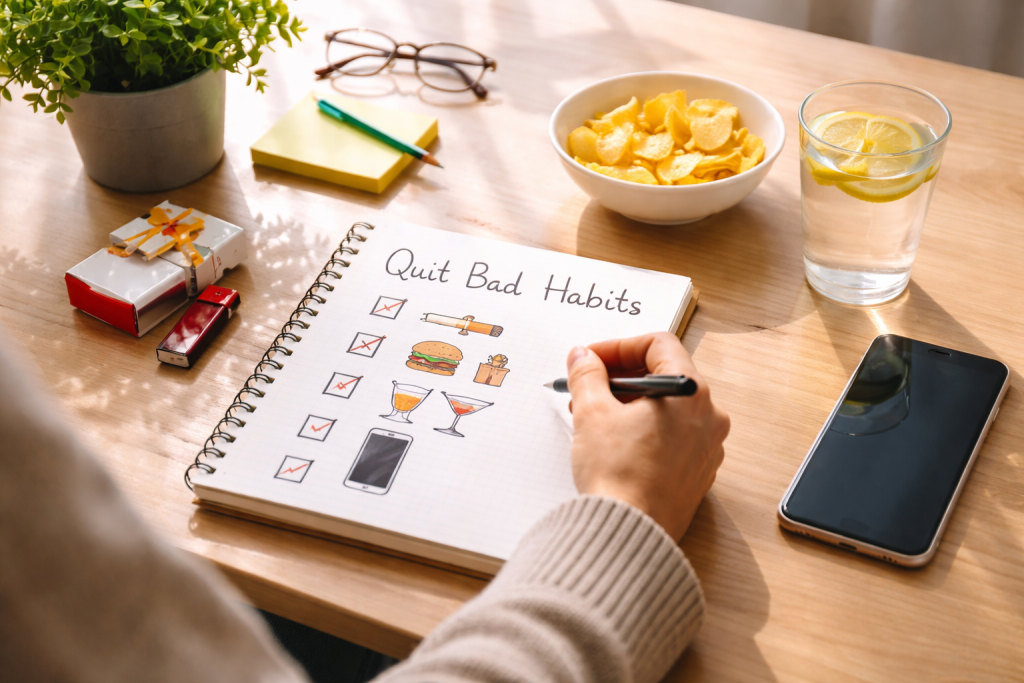
The human brain is a remarkable organ, wired for efficiency. Habits, good or bad, are essentially shortcuts the brain takes to conserve energy. They are learned automatic responses that are triggered by specific cues, leading to a particular routine and culminating in a reward. This cycle, known as the habit loop, is the fundamental mechanism behind all habits, including the ones we wish to shed. Understanding this loop is the crucial first step in dismantling it.
Contents
- 1 The Habit Loop Explained
- 2 The Brain’s Reward System and Habit Formation
- 3 The Role of Emotions in Habit Reinforcement
- 4 The Power of Self-Observation
- 5 Recognizing the Cues and Triggers
- 6 Honest Self-Assessment of Consequences
- 7 The SMART Goal Framework
- 8 Breaking Down Large Goals into Smaller Steps
- 9 Focusing on Process, Not Just Outcome
- 10 Identifying Meaningful Rewards
- 11 Linking Rewards to Specific Achievements
- 12 The Importance of Immediate Gratification (Within Reason)
- 13 The Role of an Accountability Partner
- 14 Joining Support Groups or Communities
- 15 Communicating Your Goals to Loved Ones
- 16 Cultivating Present Moment Awareness
- 17 Recognizing and Labeling Thoughts and Feelings
- 18 Developing Non-Judgmental Self-Observation
- 19 Anticipating and Planning for Potential Obstacles
- 20 Practicing Self-Compassion During Lapses
- 21 Re-evaluating and Adjusting Your Strategies
The Habit Loop Explained
At its core, the habit loop consists of three key components. The first is the cue, which is the trigger that initiates the behaviour. This could be a time of day, a location, a particular emotion, or the presence of certain people. For instance, feeling stressed might be a cue for stress eating. The second component is the routine, which is the behaviour itself – the action you take in response to the cue. This is the observable habit, such as reaching for a snack. Finally, there’s the reward, which is the positive feeling or outcome that reinforces the habit loop, making it more likely to be repeated. The temporary relief from stress gained from eating, or the dopamine hit from social media, acts as the reward. Over time, this loop becomes so ingrained that the behaviour often occurs without conscious thought.
The Brain’s Reward System and Habit Formation
Our brains are fundamentally driven by the pursuit of pleasure and the avoidance of pain. When a behaviour provides a reward, however fleeting or even ultimately detrimental, the brain releases neurotransmitters like dopamine, which create feelings of satisfaction and pleasure. This chemical release acts as a powerful motivator, reinforcing the connection between the cue, routine, and reward. With repeated association, the brain begins to anticipate the reward, making the urge to engage in the habit even stronger. This is why breaking free can feel like fighting against our own biology; the reward system is actively encouraging the behaviour.
The Role of Emotions in Habit Reinforcement
Emotions play a significant role in the formation and maintenance of bad habits. Often, these habits serve as coping mechanisms for uncomfortable feelings like stress, boredom, anxiety, or loneliness. The routine becomes a way to alleviate or distract from these negative emotions. However, relying on a bad habit for emotional regulation can be a double-edged sword. While it may provide temporary relief, it doesn’t address the underlying cause of the emotion and can often lead to further negative consequences, creating a downward spiral. Understanding the emotional triggers behind your habits is therefore paramount.
Before you can bid farewell to bad habits, you must first identify and honestly acknowledge them. This requires introspection and a willingness to confront behaviours that may be uncomfortable to admit. Without clear identification, attempts at change can be vague and unfocused, leading to frustration and a return to old patterns.
The Power of Self-Observation
The most effective way to identify your bad habits is through diligent self-observation. For a designated period, perhaps a week or two, actively pay attention to your actions, thoughts, and feelings throughout the day. Keep a journal or use a note-taking app to record instances where you engage in behaviour you later regret or wish to change. Be specific. Instead of simply writing “I wasted time,” note down “I spent 30 minutes scrolling through social media instead of starting my report at 2 PM.” This detailed observation helps to reveal the true extent of your habits and the specific triggers associated with them.
Recognizing the Cues and Triggers
Once you begin observing, start looking for patterns. What cues reliably precede the unwanted behaviour? Are there particular times of day, locations, emotions, or even people that seem to reliably set off your bad habit? For example, if you find yourself reaching for sugary snacks every afternoon around 3 PM, that time of day is a strong cue. If stress often leads you to smoke, then stress is your emotional cue. Explicitly identifying these cues is crucial because they are the points of intervention where you can disrupt the habit loop.
Honest Self-Assessment of Consequences
Beyond just noticing the behaviour, it’s vital to honestly assess the consequences of your bad habits. How do they impact your physical health, mental well-being, relationships, finances, or productivity? Sometimes, the negative consequences are obvious, like weight gain from unhealthy eating. Other times, they are more subtle, such as the erosion of trust due to chronic lateness or the missed opportunities resulting from procrastination. A clear understanding of the detrimental impact of your habits will strengthen your motivation to change.
The path to lasting change is paved with well-defined goals. Unrealistic aspirations can lead to disappointment and abandonment of the change process. Conversely, setting achievable goals fosters a sense of accomplishment, building momentum and making further progress more likely.
The SMART Goal Framework
To ensure your goals are effective, employ the SMART framework: Specific, Measurable, Achievable, Relevant, and Time-bound. Instead of a vague goal like “eat healthier”, a SMART goal would be “Replace my afternoon sugary snack with a piece of fruit every weekday for the next month.” This is specific, measurable (you either did it or you didn’t), achievable (replacing a snack with fruit is generally feasible), relevant to your overall health, and time-bound (for the next month).
Breaking Down Large Goals into Smaller Steps
Large, ambitious goals can feel overwhelming. The key to making them manageable is to break them down into smaller, more digestible steps. If your goal is to exercise daily, start with a realistic target of three times a week for 30 minutes. Once you consistently achieve that, you can gradually increase the frequency or duration. Each small victory builds confidence and reinforces your commitment.
Focusing on Process, Not Just Outcome
While the ultimate outcome is important, focusing heavily on it can be demotivating if progress is slow. Instead, prioritise the process – the daily actions you take to achieve your goal. If your goal is to write a book, focus on writing a set number of words each day, rather than fixating on the finished manuscript. By consistently engaging in the process, you are actively working towards your outcome.
The brain learns and adapts based on consequences, and positive reinforcement is a powerful tool for encouraging desired behaviours. By associating positive rewards with your efforts to change, you can effectively retrain your brain to favour the new, more beneficial habits.
Identifying Meaningful Rewards
The type of reward that motivates you is unique to you. What genuinely makes you feel good or accomplished? It doesn’t have to be extravagant. For some, it might be an extra hour of leisure time, a new book, a relaxing bath, or a small treat. The key is that the reward is something you genuinely look forward to and that feels like a worthwhile acknowledgement of your progress.
Linking Rewards to Specific Achievements
Crucially, your rewards should be directly linked to specific achievements related to your goal. This creates a clear cause-and-effect relationship. If you successfully avoided a specific trigger for your bad habit or completed a planned positive behaviour, then reward yourself. This reinforces the link between the desired action and the positive outcome. For example, if your goal is to reduce screen time in the evenings, reward yourself with a guilt-free evening watching a movie after a week of sticking to your new routine.
The Importance of Immediate Gratification (Within Reason)
While long-term benefits are the ultimate aim, short-term rewards can provide immediate motivation. For smaller, consistent efforts, consider smaller, more frequent rewards. This could be as simple as a moment of self-praise or a brief enjoyable activity after accomplishing a smaller step. As you progress to more significant milestones, you can introduce larger rewards. The immediate positive feedback helps to solidify the new behaviour in your mind.
Human beings are social creatures, and leveraging the power of social connection can significantly enhance your ability to implement lasting change. Sharing your journey with others can provide encouragement, guidance, and a crucial sense of accountability.
The Role of an Accountability Partner
An accountability partner is someone with whom you share your goals and progress. This could be a friend, family member, colleague, or even a therapist. You agree to check in with each other regularly, sharing your successes and challenges. Knowing that someone is expecting an update can be a powerful motivator to stay on track, especially when those moments of temptation arise.
Joining Support Groups or Communities
For many habits, there are dedicated support groups or online communities where you can connect with others who are facing similar challenges. These communities offer a wealth of shared experiences, practical advice, and emotional support. Hearing how others have navigated difficult situations can provide valuable insights and reassurance that you are not alone on your journey.
Communicating Your Goals to Loved Ones
Simply informing your close friends and family about your intentions can be beneficial. They can then offer encouragement and understanding. They might also be able to help by not enabling your bad habits or by reminding you of your goals when you’re struggling. However, be mindful of who you share with and ensure they are supportive rather than judgemental.
Mindfulness, the practice of paying attention to the present moment without judgement, is a cornerstone of understanding and changing behaviour. It cultivates a deeper self-awareness, allowing you to recognise your habitual patterns as they arise, understand their underlying causes, and make conscious choices to deviate from them.
Cultivating Present Moment Awareness
The core of mindfulness is about being fully present. This means observing your thoughts, feelings, bodily sensations, and the external environment without getting carried away by them. When the urge to engage in a bad habit arises, mindfulness allows you to notice that urge without immediately acting on it. You can observe it, acknowledge its presence, and then choose to respond differently. This conscious pause between the urge and the action is where real change can happen.
Recognizing and Labeling Thoughts and Feelings
Through mindfulness, you learn to recognise your internal experiences, such as anxious thoughts or feelings of boredom, as just that – thoughts and feelings, not necessarily truths or mandates for action. By labelling them – “This is anxiety” or “I’m feeling bored right now” – you create a degree of separation, preventing them from automatically dictating your behaviour. This detachment is crucial for breaking the automatic link between emotional cues and habitual responses.
Developing Non-Judgmental Self-Observation
Self-awareness through mindfulness is about observation without self-criticism. When you notice yourself slipping into an old habit, instead of berating yourself, simply acknowledge it as a learning opportunity. This non-judgemental approach fosters a more compassionate and resilient mindset, making it easier to get back on track after a lapse. It’s about understanding your patterns, not condemning yourself for them.
The journey to breaking bad habits is rarely a straight line. Setbacks are inevitable, and how you respond to them can make all the difference in your long-term success. Viewing setbacks not as failures, but as opportunities for learning and growth, is essential for sustained commitment.
Anticipating and Planning for Potential Obstacles
Before challenges arise, anticipate them. Think about the situations or feelings that are most likely to trigger a relapse. Once identified, develop a proactive plan for how you will handle them. For example, if you know that a stressful work deadline might lead you to smoke, have a healthy coping mechanism ready, like a stress ball, a deep breathing exercise, or a call to your accountability partner.
Practicing Self-Compassion During Lapses
When you do stumble, be kind to yourself. Negative self-talk can be incredibly destructive and demotivating. Instead of dwelling on the perceived failure, acknowledge what happened, learn from it, and recommit to your goals. Remind yourself of the progress you’ve already made and the reasons why you embarked on this journey of change in the first place.
Re-evaluating and Adjusting Your Strategies
Sometimes, the strategies you initially put in place might not be as effective as you hoped. A setback can be a signal that it’s time to re-evaluate your approach. Perhaps your goals need to be adjusted, your rewards need to be more appealing, or your support system needs to be strengthened. Be flexible and willing to adapt your plan as needed. The goal is not perfection, but persistent progress. Embrace the ongoing process of learning and refining your approach, and you will pave the way for lasting, meaningful change.

Our mission is to assist students, beginners, and professionals in learning more effectively, developing practical skills, and enhancing their confidence in today’s digital world.